What is Fencing
FOIL
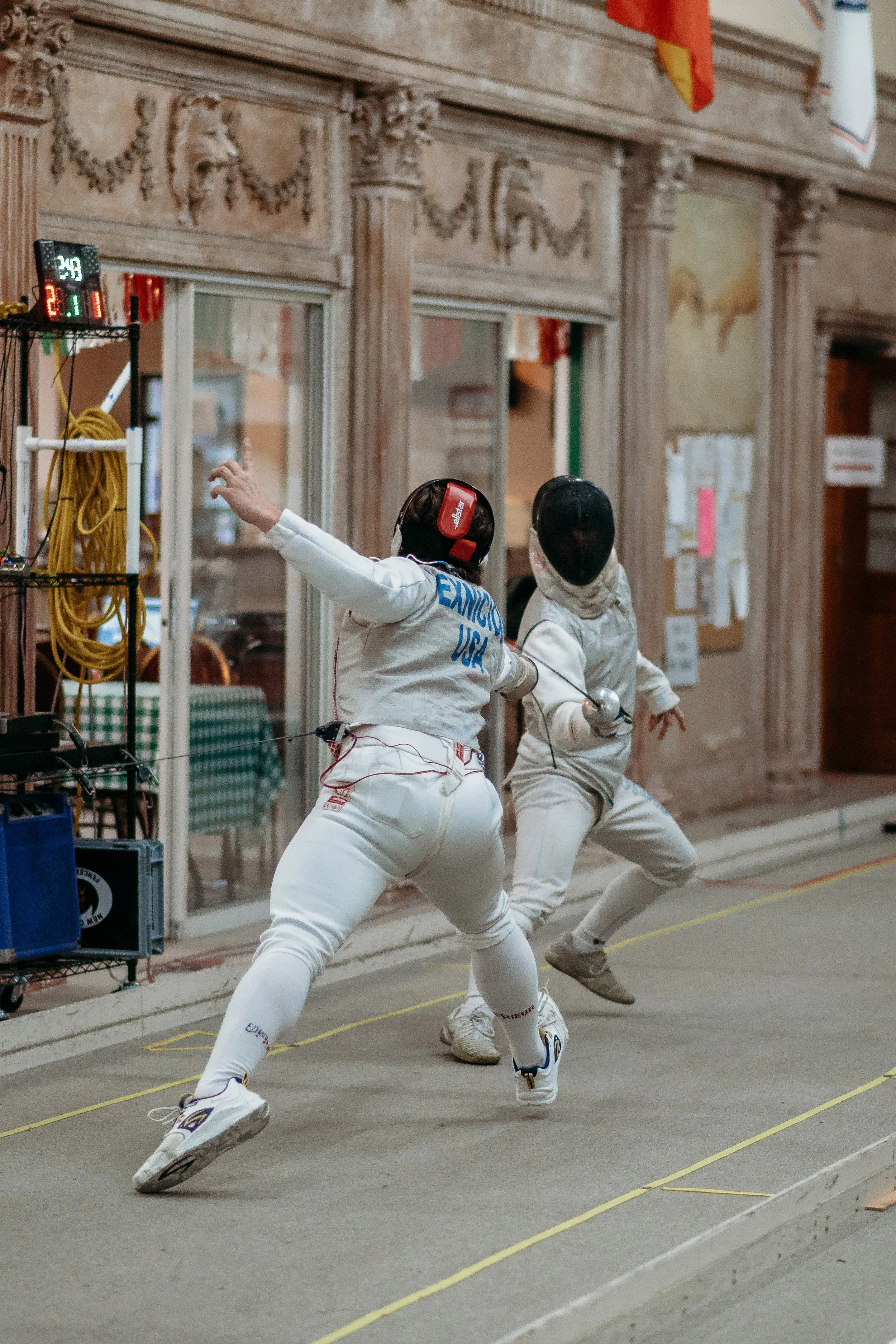
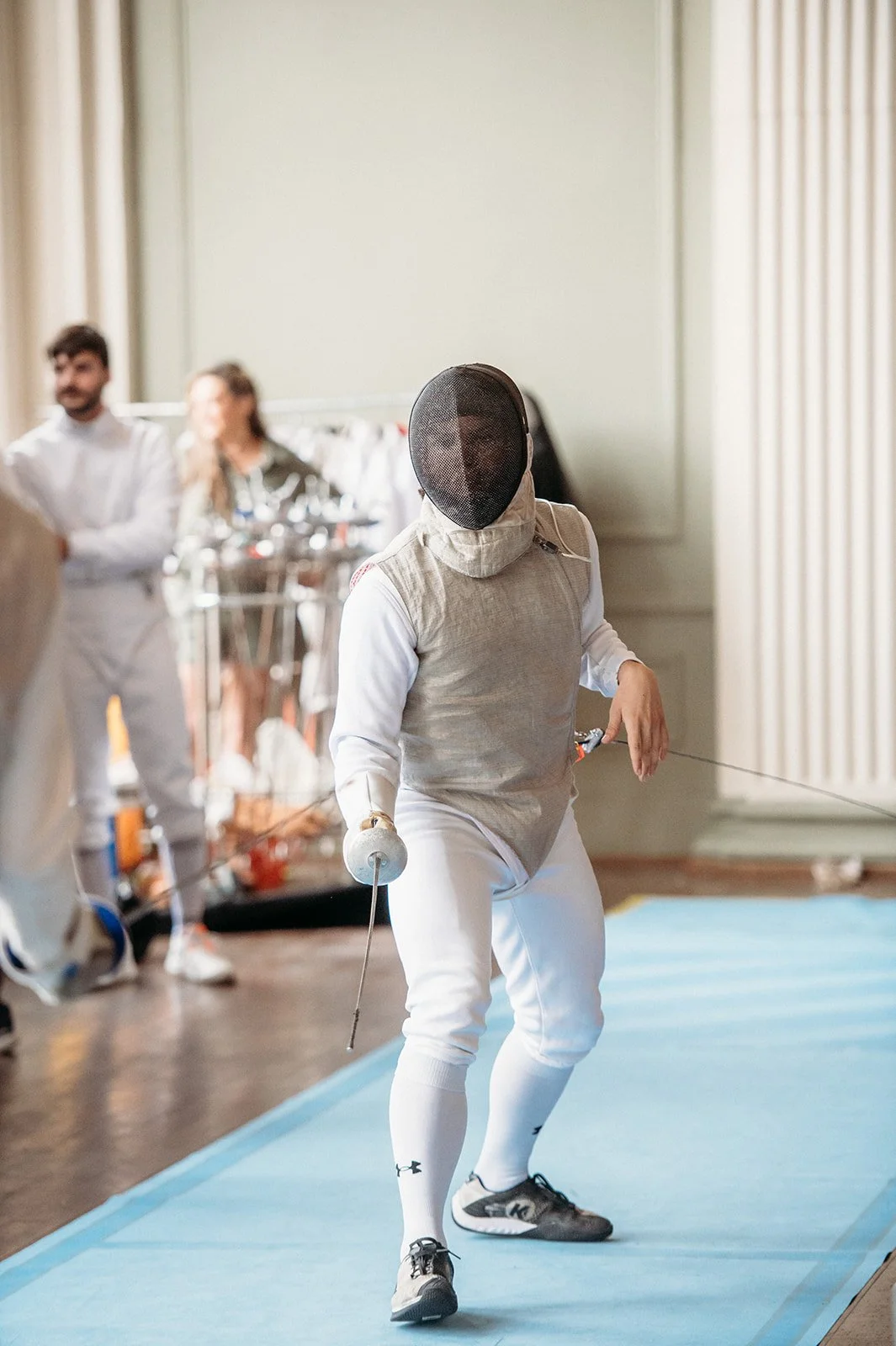
Foil is a light thrusting weapon that emphasizes precision, timing, and tactical decision-making. Touches are scored using only the tip of the blade, and the valid target area is limited to the torso, including the front, back, and shoulders. The arms, legs, neck, and head are not considered valid target areas.
Foil utilizes a convention known as right-of-way, which determines which fencer is awarded a touch when both athletes land valid hits simultaneously. This system rewards proper offensive and defensive actions, making foil an excellent weapon for developing technical fundamentals and tactical awareness.
Fencers wear a conductive vest, called a lamé, which covers the valid target area. Electronic scoring equipment registers valid touches on the lamé, while hits outside the target area are recorded as off-target and temporarily halt the action without awarding a point.
EPEE
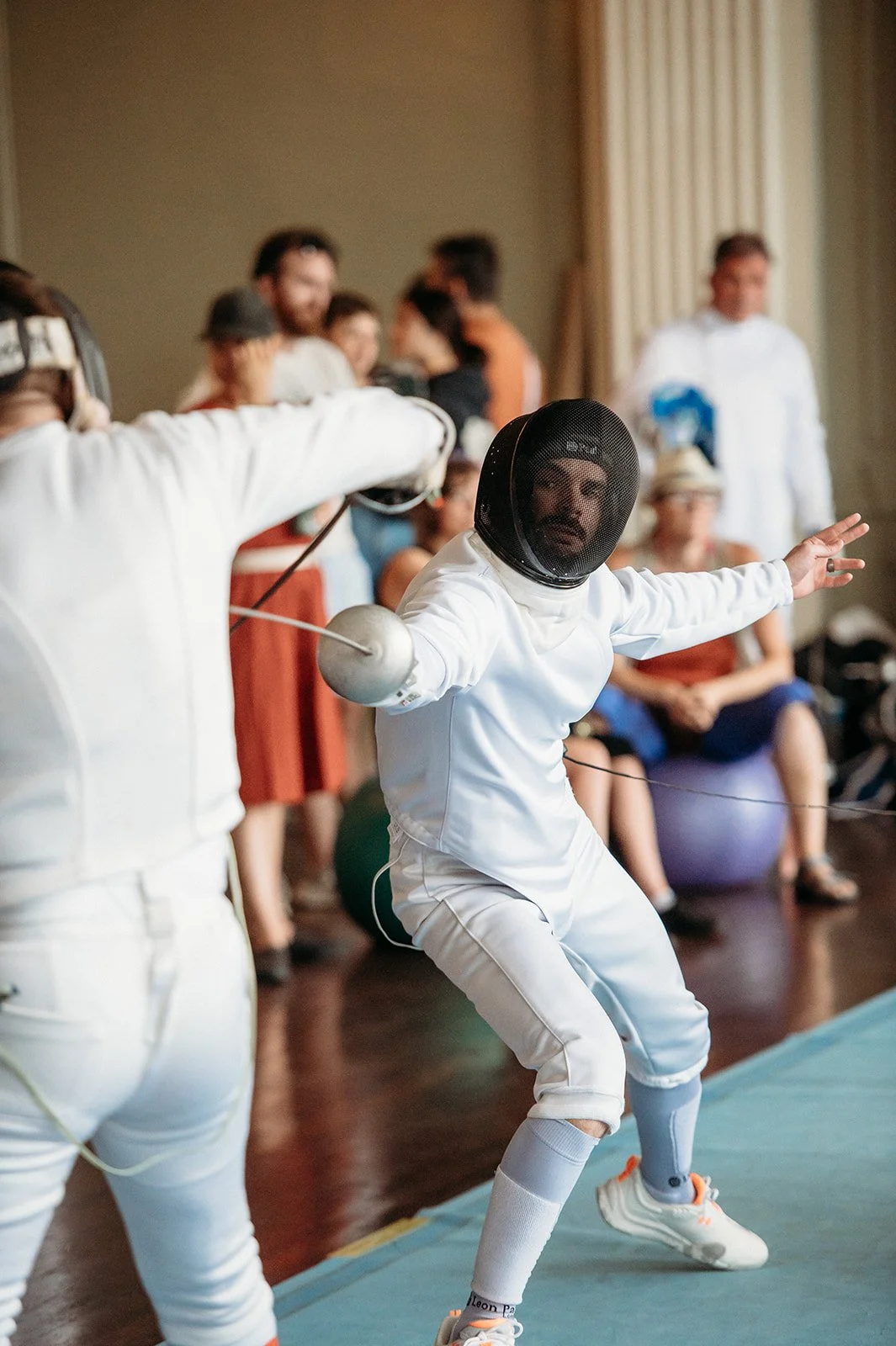
Épée is the direct descendant of the historic dueling sword and is the heaviest of the three Olympic fencing weapons. Like foil, touches are scored exclusively with the tip of the blade, but in épée the entire body—from mask to toe—is considered valid target area.
Unlike foil and sabre, épée does not use right-of-way rules. If both fencers land a valid touch within a fraction of a second, both receive a point. This unique characteristic places a premium on timing, distance control, patience, and strategic decision-making.
Because the entire body is a valid target, épée fencers do not wear a lamé. Electronic scoring equipment registers touches when sufficient pressure is applied to the spring-loaded tip, making accuracy and precision essential to success.
SABER
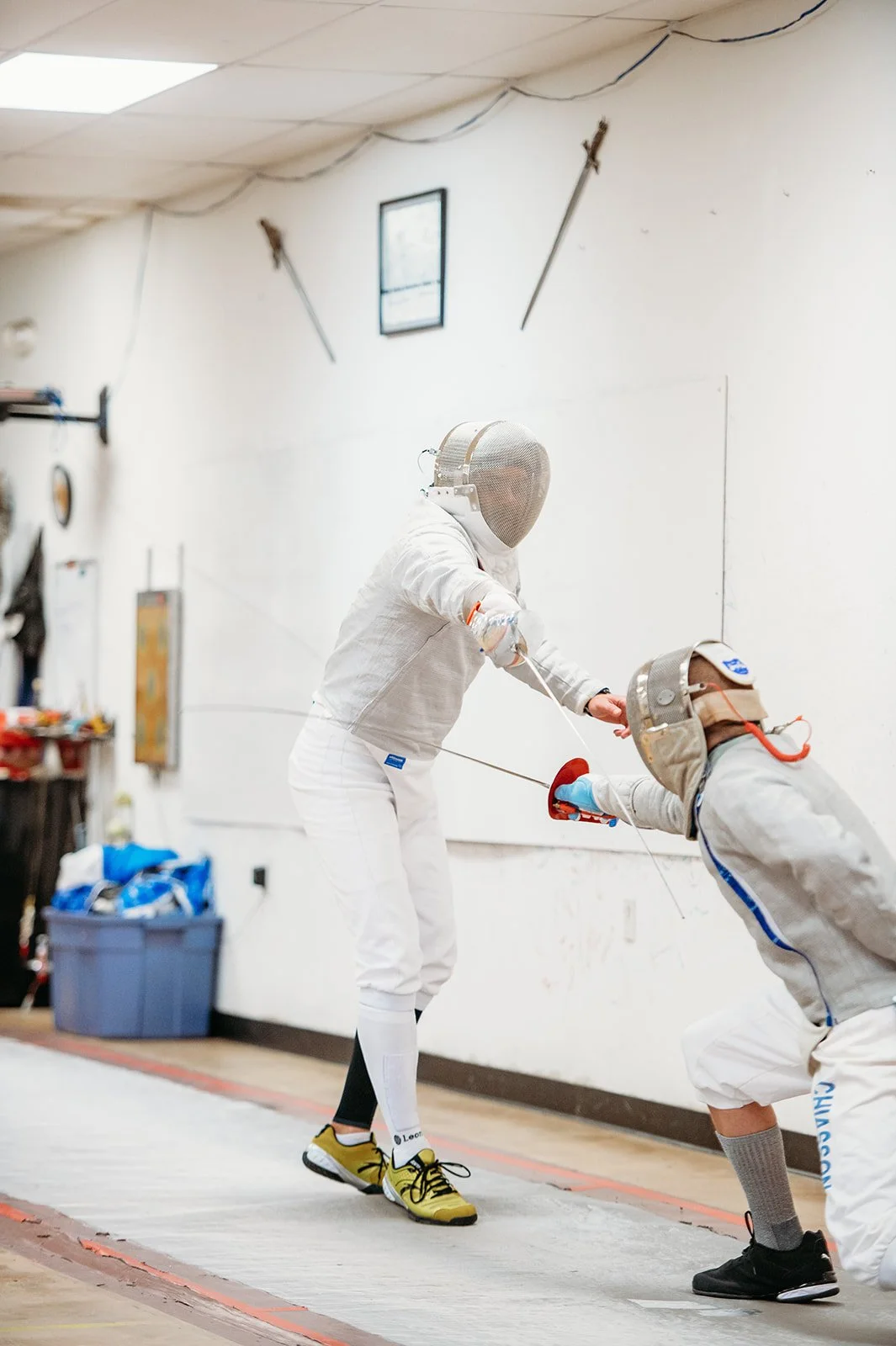
Sabre evolved from the cavalry swords used by mounted soldiers and is the fastest-paced of the three fencing disciplines. Fencers may score with either the tip or the cutting edge of the blade, creating a dynamic style that combines speed, athleticism, and aggressive tactics.
The valid target area extends from the waist upward, including the torso, arms, and head. This target area reflects the historical origins of the weapon, representing the portions of an opponent that would have been exposed while mounted on horseback.
Like foil, sabre uses right-of-way rules to determine priority when simultaneous touches occur. Sabre bouts are known for their explosive actions, rapid changes in momentum, and split-second tactical decisions. Fencers wear a conductive lamé and specialized mask covering to allow the electronic scoring system to accurately register valid touches.
Our Mission
At the New Orleans Fencers Club, our mission is to develop skilled, disciplined fencers through high-quality coaching, a respect for tradition, and a commitment to personal growth. We strive to create an environment where individuals of all experience levels can pursue mastery of the sport, build confidence, and challenge themselves both physically and mentally. Through structured training and a strong club culture, we aim to inspire a lifelong appreciation for fencing and the values it represents.
More Than Just Sport
Fencing is more than a sport—it’s a craft that rewards focus, strategy, and resilience. At NOFC, members are introduced to an experience that blends athletic performance with mental sharpness, where every bout is an opportunity to learn and improve. Whether training for competition or simply exploring something new, fencers benefit from a setting that emphasizes consistency, discipline, and steady progression. It’s a place where effort is valued, progress is earned, and each step forward—no matter how small—builds toward something greater.
Our History
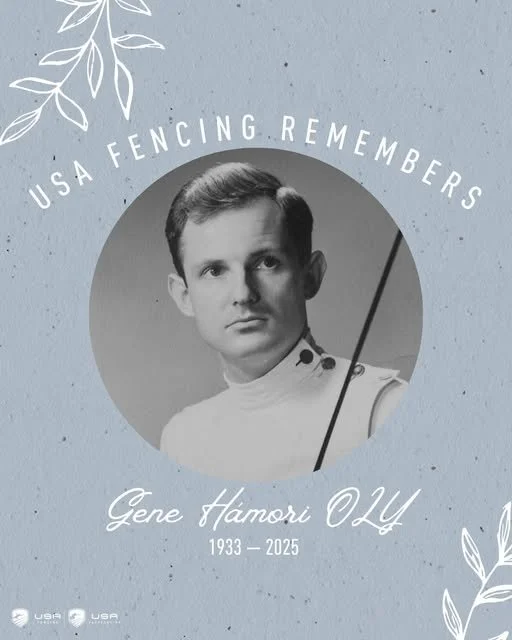
The history of the New Orleans Fencers Club is deeply connected to the longstanding fencing tradition of the city and to the legacy of legendary coach and Olympian Gene Hámori. Active in the New Orleans fencing community for decades, Gene Hámori helped shape generations of athletes through his dedication to technical precision, disciplined training, and the classical European approach to Olympic fencing. His influence, along with the contributions of other accomplished coaches and competitors, helped establish NOFC as a respected home for the sport in the Gulf South.
The club itself traces its roots back to the late 1970s and early 1980s, when New Orleans became known regionally for strong, technically refined fencing—particularly within the Hungarian saber tradition. During this era, figures such as Dr. John Kalmar brought a clean, elegant style of fencing that left a lasting impression on the local fencing scene. NOFC became a place where serious competitive training and a passion for the sport came together, attracting fencers dedicated not only to winning, but to mastering the discipline and artistry of fencing.
Today, the New Orleans Fencers Club continues to carry that tradition forward. Serving fencers of all ages and skill levels, the club remains committed to preserving the values that have defined it for decades: discipline, respect, sportsmanship, and continuous improvement. From beginners discovering the sport for the first time to experienced competitors refining their craft, NOFC stands as both a training ground and a steward of New Orleans’ unique fencing heritage.